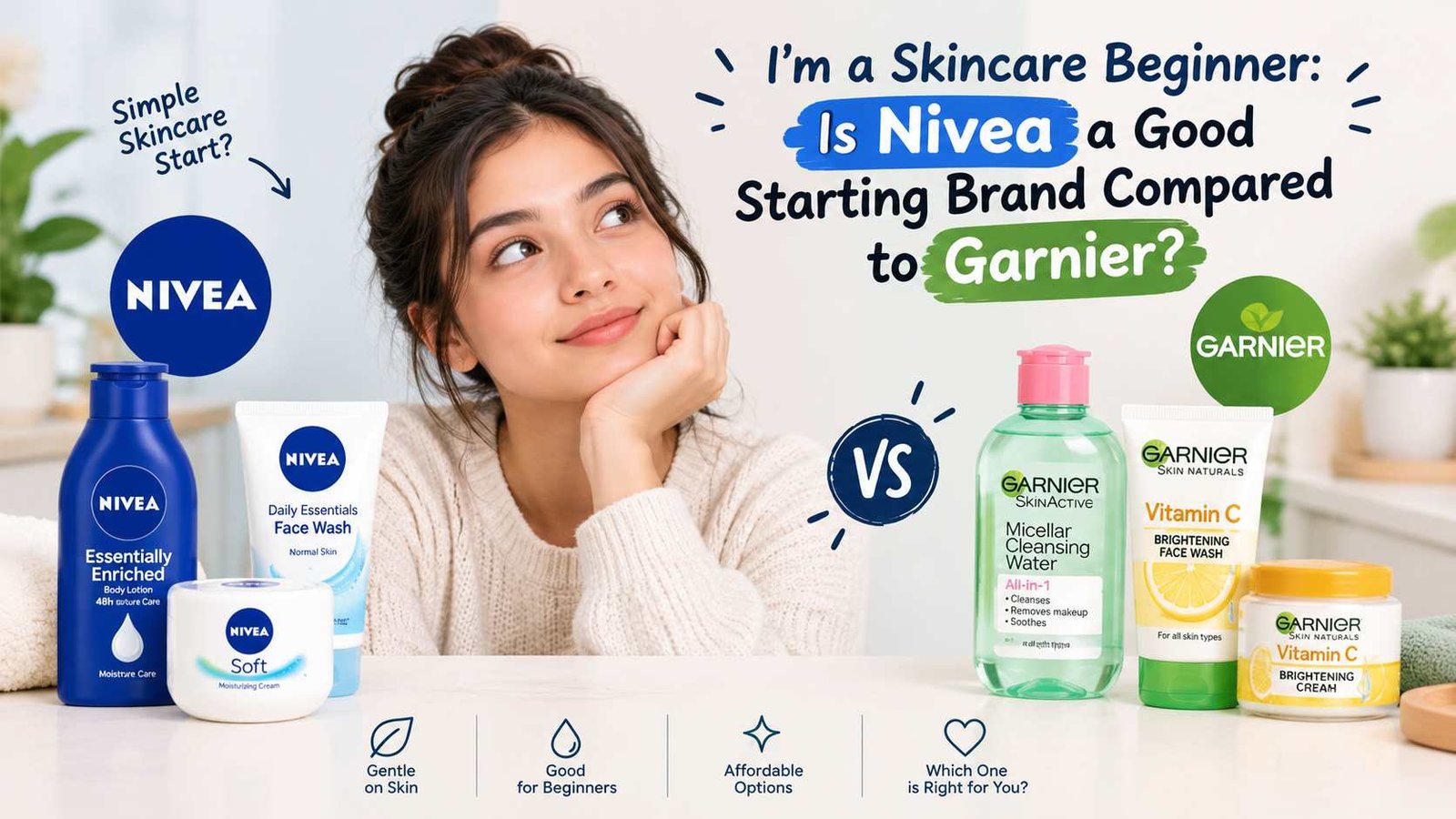
I’m a Skincare Beginner: Is Nivea a Good Starting Brand Compared to Garnier?
You’re standing in the drugstore aisle. Two brands sit side by side, one blue, one green, and you have no idea which to grab.
Here’s the short version: for most true beginners, Nivea is the easier start.
But Garnier wins in a few specific situations, and you don’t have to pick just one.
Let’s sort out which situation is yours.
The Short Answer: Which One Should You Start With?
Start with Nivea if your skin feels dry, tight or easily irritated, or if you just want fewer decisions.
Start with Garnier if your skin gets oily or breaks out, or if you already know you want to tackle something specific, like dullness or dark marks.
Can’t decide? Mix them. Plenty of people use a Garnier cleanser with a Nivea moisturizer and a separate sunscreen. Nothing says you need brand loyalty.
Nivea vs Garnier at a Glance
Instead of asking “which brand wins,” ask “which product wins each job.” Here’s how it breaks down for a beginner:
| Job | Nivea | Garnier |
|---|---|---|
| Moisturizer | Strong pick, especially for dry skin | Lighter feel, good for oily skin |
| Cleanser | Decent basics | Wider range, micellar water is a favorite |
| First active (like Vitamin C) | Limited options | Much more choice |
| Texture | Rich and creamy | Light and fast-absorbing |
| Best for | Dry, sensitive, “I want it simple” | Oily, acne-prone, “I have a specific goal” |
| Price | Budget-friendly | Budget-friendly |
Notice what’s missing: sunscreen. We’ll get to that, because it matters more than any row above.
What a Skincare Beginner Actually Needs
Three products. That’s it.
A gentle cleanser. A moisturizer. A sunscreen.
Serums, masks, toners and ten-step routines can wait. Beginners who start with six products at once often end up with red, stinging skin and no idea which product caused it.
So the brand matters less than getting these three steps done every single day.
Not Sure of Your Skin Type? Find Out in an Hour
Every guide says “choose based on your skin type.” Nobody tells you how to figure it out. Try this:
- Wash your face with a gentle cleanser.
- Pat dry and apply nothing.
- Wait one hour.
- Check how your skin feels.
What you notice tells you a lot:
- Tight, rough or flaky: probably dry.
- Shiny all over: probably oily.
- Shiny only on your forehead and nose: probably combination.
- Stinging or redness after most products: probably sensitive.
Your skin can also change with the seasons. Many people run drier in winter and oilier in summer, so recheck now and then.
Where Nivea Works Well for Beginners
Nivea’s biggest strength is that it keeps things simple. The lineup is easy to scan, so you spend less time second-guessing.
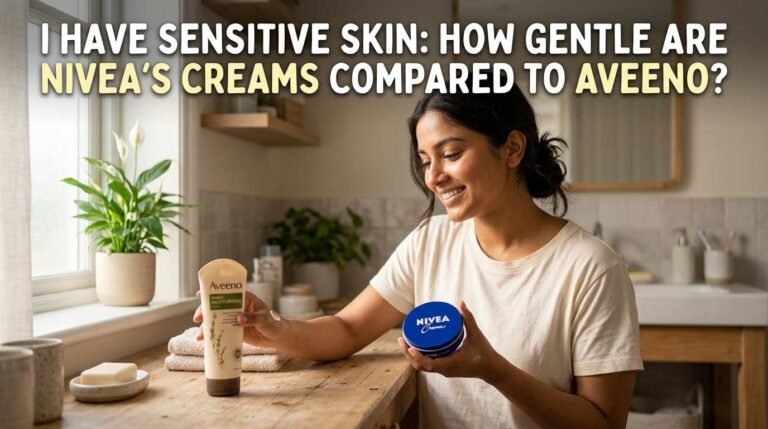
Its moisturizers are the main draw. Nivea Soft is a light cream many people use on face and body. Nivea Creme, the classic blue tin, is much richer and built for very dry patches.
Take Maya, a college student whose cheeks crack every winter. A simple Nivea moisturizer after washing is the kind of easy, forgiving fix that helps her stay consistent.
Nivea does have limits. It offers fewer actives, so you’ll outgrow it if you want to treat dark spots or acne.
Also watch the texture. The richest creams can feel heavy on oily skin.
One more thing: check whether a product is made for the face. Some Nivea creams are all-purpose, and a thick body cream on an oily face is a common beginner mistake.
Where Garnier Works Well for Beginners
Garnier gives you more choices. Micellar water, face washes, Vitamin C products and oil-control formulas all sit under one name.
Its textures also tend to be lighter. That helps if you hate that heavy, greasy feeling by midday.
Think of Jordan, who has a shiny T-zone and a few breakouts around his chin. A light Garnier cleanser and a lightweight moisturizer match his skin better than a rich cream would.
The tradeoff is that variety can backfire. You walk in for a cleanser and walk out with a serum, a mask and a toner you don’t need yet.
Garnier’s actives can also sting if you add them too fast. That’s not a flaw, just a reason to go slowly.
Nivea or Garnier by Skin Type
Dry skin
Go with Nivea for your moisturizer. Richer creams hold in water and ease that tight feeling.
A gentle cleanser matters here too. Harsh washing makes dryness worse.
Oily or acne-prone skin
Garnier has more options aimed at oil and breakouts, and its textures feel lighter.
Still use a moisturizer. Skipping it can make skin feel oilier, not less oily.
Sensitive skin
Nivea’s simpler approach usually means fewer things to react to. But “simple” is not a guarantee, so patch test.
Dab a little product on your inner arm or jawline for a day or two before using it on your whole face.
Combination skin
Mix and match. Use a light Garnier product for cleansing and a Nivea moisturizer where you feel dry, or a lighter moisturizer overall.
Sunscreen: The Step Neither Brand Settles for You
Here’s the part most beginner guides skip. Your moisturizer probably doesn’t protect you from the sun.
Daily sunscreen is the single most effective thing you can do for your skin long term. It helps prevent sun damage, premature aging, and the dark marks that linger after breakouts.
Look for these on the label:
- SPF 30 or higher
- Broad-spectrum, so it covers both UVA and UVB rays
- Made for the face, since body sunscreens can feel heavy or greasy
Apply it every morning, even on cloudy days. Plan on a generous amount for your face, not a thin smear.
Both brands sell sun products, but ranges differ by country. Check the label rather than assuming your moisturizer includes SPF.
How to Read a Skincare Label in 60 Seconds
You don’t need a chemistry degree. Scan for a few things:
- Glycerin, panthenol, ceramides: hydrating, barrier-friendly ingredients.
- Fragrance (listed as “parfum”): worth checking if your skin is sensitive.
- “Non-comedogenic”: means the product is designed not to clog pores. It’s helpful, but not a guarantee for every person.
- Active ingredients like Vitamin C or salicylic acid: powerful, so start slowly.
Ingredients are listed from highest to lowest concentration. The first few matter most.
Starter Kits With Real Costs
Prices vary by store and change often, so treat these as ballpark numbers and check current prices before you buy.
Dry skin kit
- Gentle cleanser: roughly $8-$10
- Nivea Soft or a Nivea face moisturizer: roughly $6-$12
- Face sunscreen SPF 30+: roughly $8-$15
Estimated total: about $22-$37
Oily or acne-prone kit
- Garnier face wash: roughly $6-$9
- Lightweight moisturizer: roughly $8-$12
- Face sunscreen SPF 30+: roughly $8-$15
Estimated total: about $22-$36
Sensitive skin kit
- Gentle, fragrance-free cleanser: roughly $8-$12
- Simple moisturizer with a short ingredient list: roughly $6-$12
- Face sunscreen SPF 30+: roughly $8-$15
Estimated total: about $22-$39
The mix-both kit
- Garnier Micellar Water: roughly $7-$9
- Nivea Soft: roughly $6-$12
- Face sunscreen SPF 30+: roughly $8-$15
Estimated total: about $21-$36
See what happened? A full routine costs less than a single serum from many premium brands.
Your First 8 Weeks: A Simple Roadmap
Skin takes time. Here’s a pace that keeps you out of trouble.
Weeks 1-2: Cleanser, moisturizer, sunscreen. Nothing else. Let your skin settle.
Weeks 3-4: Stay consistent. Notice how your skin feels in the morning and by afternoon.
Weeks 5-6: If you want more, add one new product. Maybe a Garnier Vitamin C serum, used a few times a week at first, always followed by sunscreen.
Weeks 7-8: Reassess. Is your skin calmer? Still dry? Still oily? Adjust from there.
What’s normal? Mild dryness or a little tightness as your skin adjusts can happen with a new active.
What’s not normal? Burning, swelling, intense redness or a rash. Stop the product and talk to a pharmacist or dermatologist if it doesn’t settle.
Common Beginner Mistakes
Starting too many products at once. If your skin reacts, you won’t know why.
Skipping sunscreen. It’s the step with the biggest payoff, and the one people drop first.
Buying what’s trending instead of what fits. What works on a TikTok creator may not suit your skin.
Skipping the patch test. It takes two minutes and can save you a week of irritation.
Quitting after seven days. Most routines need several weeks before you can judge them.
Can You Use Nivea and Garnier Together?
Absolutely. Brands don’t have rules about who they share a shelf with.
A simple example: cleanse with Garnier Micellar Water, moisturize with Nivea Soft, then finish with a sunscreen from any brand you like.
Just add one new product at a time. That way you can tell what’s helping and what’s causing trouble.
Final Verdict
Here’s how it shakes out.
- Totally new, dry or sensitive skin, want it easy: start with Nivea.
- Oily skin, breakouts or a specific goal like dullness: start with Garnier.
- Not sure: mix both and build slowly.
- Everyone: add a face sunscreen from day one.
So is Nivea a good starting brand compared to Garnier? Yes, for most beginners. But the best brand is the one that fits your skin and that you’ll actually use every day.
Consistency beats the logo on the bottle every time.
If you deal with persistent acne, painful breakouts or lasting irritation, see a dermatologist. This article is general information, not medical advice.
Frequently Asked Questions
Is Nivea good for skincare beginners?
Yes. The range is simple, the moisturizers are strong, and the prices are friendly. It suits dry and sensitive skin especially well.
Is Garnier good for beginners?
Yes, especially if you have oily skin or a specific concern. Just avoid buying too many products at once.
Which is better for oily skin?
Garnier usually offers more lightweight and oil-focused options. Nivea can still work if you pick lighter products made for the face.
Which is better for dry skin?
Nivea tends to have the edge thanks to its richer moisturizers.
Is Garnier Vitamin C safe for a beginner?
Generally yes, if you start slowly. Patch test first, use it a few times a week, and wear sunscreen every morning.
Can I use both brands together?
Yes. Many people do. Introduce one product at a time.
Do Nivea or Garnier moisturizers have SPF?
Not necessarily. Check each product’s label, and use a separate face sunscreen if yours doesn’t list SPF.
How long until I see results?
Give a basic routine four to eight weeks. Active ingredients can take longer to show a difference.