
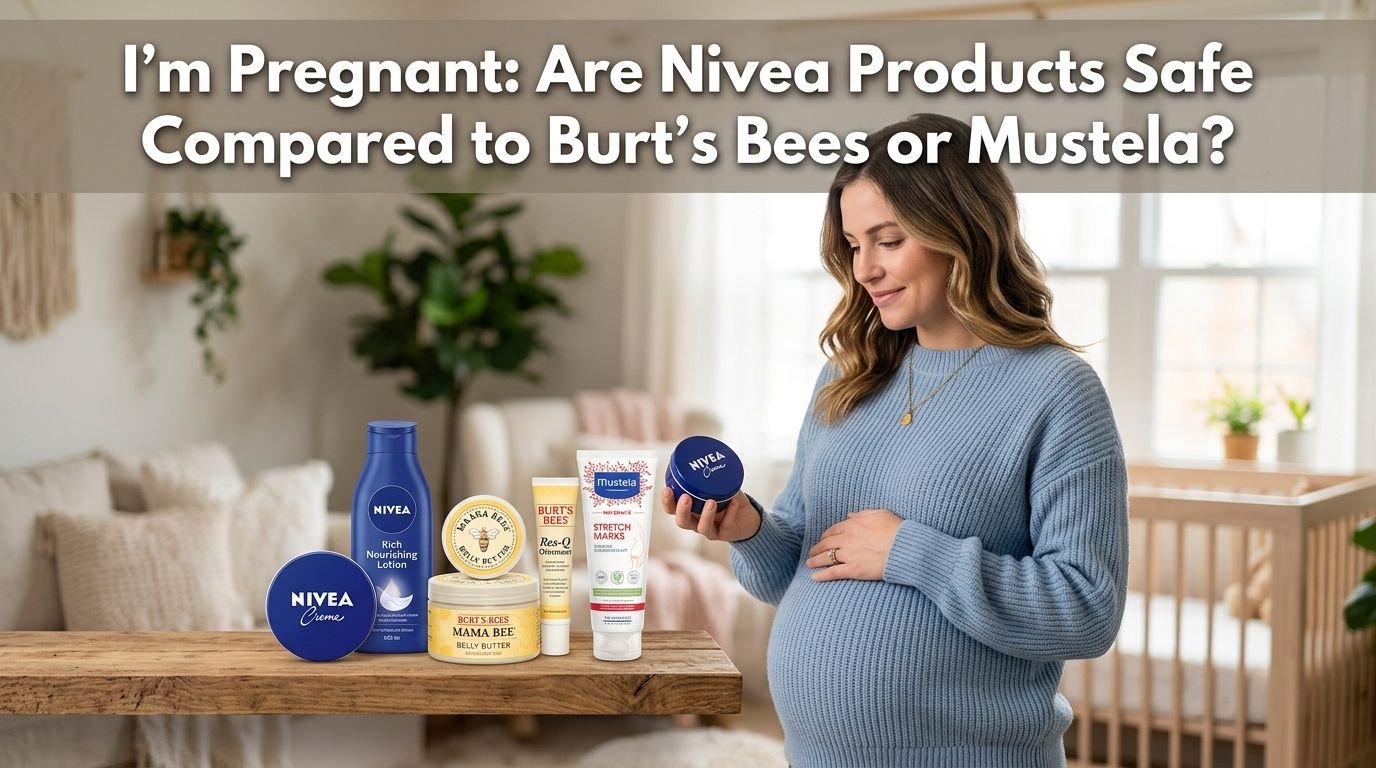
I’m Pregnant: Are Nivea Products Safe Compared to Burt’s Bees or Mustela?
Pregnancy changes many things, including your skin. One day, your usual body lotion feels perfectly fine; the next, your skin feels dry, itchy, or more sensitive than before. Naturally, you may start checking every ingredient before applying anything.
If you’re comparing Nivea, Burt’s Bees, and Mustela, here’s the good news: you don’t automatically need to replace your regular moisturizer just because you’re pregnant. What matters most is the specific product, its ingredients, and how you plan to use it.
Nivea is often considered for everyday moisturizing, Burt’s Bees appeals to shoppers who prefer products positioned around natural-origin ingredients, and Mustela offers skincare designed for babies, children, and mothers. However, none of these brand identities alone proves that every product is suitable during pregnancy.
Let’s compare them, explore ingredients worth checking, and look at how to choose a moisturizer that fits your skin and budget.
Are Nivea, Burt’s Bees, and Mustela Safe During Pregnancy?
The short answer is that many basic moisturizers can fit into a pregnancy skincare routine, but you should evaluate each product individually.
A simple body lotion designed to soften dry skin is different from an anti-aging cream containing retinol or a treatment product formulated to lighten dark spots. Even products from the same brand can have very different ingredients.
The American Academy of Dermatology recommends keeping pregnancy skincare simple: cleanse gently, moisturize regularly, and protect your skin from the sun. It also recommends reviewing ingredients carefully during pregnancy.
For example, if you have been using a basic moisturizer and it contains familiar moisturizing ingredients such as glycerin or petrolatum, there may be no reason to switch brands solely because you’re pregnant. If you use a separate facial treatment containing retinol, however, that product deserves a different level of attention.
The important rule: Choose based on the formula, not the logo on the bottle.
Read Also: I Am a Gen Z Man. Are Nivea Body Lotions Better Than Vaseline for Dry Skin?

Nivea vs. Burt’s Bees vs. Mustela: What Is the Difference?
These three brands offer different product ranges, so a fair comparison starts with products that serve the same purpose. Comparing a rich body cream with a facial treatment or a stretch-mark oil won’t tell you which brand is the better choice.
Here is how to approach each brand.
Is Nivea a Good Choice for Everyday Moisturizing?
Nivea offers a range of everyday body lotions, creams, and facial moisturizers. Depending on the product, you may find formulas designed for dry skin, lightweight hydration, or richer moisture.
For a pregnant woman dealing with dry legs or tight-feeling skin after showering, a basic Nivea moisturizer may be a practical option if its ingredients suit her needs.
Before buying or continuing to use one, check:
- Moisturizing ingredients: Look for ingredients such as glycerin, petrolatum, or other emollients where present.
- Fragrance: Some formulas contain fragrance, which may irritate sensitive skin.
- Active ingredients: Review any ingredients intended to treat acne, pigmentation, or signs of aging.
- Your skin’s response: Stop using a product that causes persistent burning, redness, or a rash.
Imagine that you already own a Nivea body lotion that keeps your elbows and legs comfortable. You don’t need to discard it simply because another brand markets a product for mothers. Check the actual formula and ask your healthcare professional about any ingredient you’re unsure about.
I Am a College Student: Are La Roche-Posay Products Better for Acne-Prone Skin Than Neutrogena?

Is Burt’s Bees Safer Because It Uses Natural Ingredients?
Burt’s Bees is known for products that emphasize natural-origin ingredients. That positioning may appeal to shoppers who prefer particular plant-derived oils, but it doesn’t automatically make a product safer during pregnancy.
Natural ingredients can still trigger allergic reactions or irritate sensitive skin. Essential oils and fragrance ingredients deserve particular attention if your skin has become more reactive.
For example, suppose you find a Burt’s Bees moisturizer containing plant oils and fragrance. If your skin becomes red or itchy after applying it, the natural-origin positioning doesn’t make that reaction irrelevant. You should stop using the product and consider a simpler, fragrance-free alternative.
When evaluating Burt’s Bees, check the complete ingredient list, the intended use, and whether the product contains ingredients that require pregnancy-specific precautions.
Natural does not automatically mean safer, just as synthetic does not automatically mean harmful. The actual formulation matters more than either label.
Is Mustela Worth Considering During Pregnancy?
Mustela offers skincare for babies, children, and mothers, including products designed for dry skin and maternity-related concerns.
That makes it a brand worth considering if you’re looking for a product aimed at a particular need. However, a maternity label or a product’s popularity among parents does not establish that every formulation is appropriate for every pregnant person.
Before choosing a Mustela product, ask yourself:
- Is it designed for the area I want to moisturize?
- Does its ingredient list suit my skin type?
- Does it contain fragrance or ingredients that could irritate me?
- Does it offer a practical benefit over a less expensive alternative?
For instance, if a Mustela body cream feels comfortable and works well for your dry skin, it may be worth buying. But if a simpler, less expensive moisturizer meets the same need, you don’t have to pay more merely because a product is marketed for maternity care.
Which Brand Is the Safest Overall?
There is no reliable, universal winner between Nivea, Burt’s Bees, and Mustela without comparing specific products.
A basic moisturizer from one brand may be a better fit than a treatment cream from another. The answer also depends on fragrance sensitivity, the area you’re treating, and the ingredients in the exact formula.
Rather than assigning a blanket safety score to each brand, compare products with the same purpose and verify their current ingredient lists before making a decision.
Which Skincare Ingredients Should Pregnant Women Check?
You don’t need to memorize every ingredient on a skincare label. Start by learning which categories deserve attention and when professional advice is appropriate.
1. Retinol and Other Retinoids
Retinoids are vitamin A derivatives used in some acne and anti-aging products. These ingredients deserve particular attention during pregnancy.
The American Academy of Dermatology recommends avoiding retinoids during pregnancy. They may appear in facial creams, serums, and products marketed for wrinkles or uneven skin tone.
Check labels for names such as retinol, tretinoin, adapalene, and tazarotene. If a product contains a retinoid, stop using it while pregnant and discuss an appropriate alternative with your healthcare professional.
Do not assume a product is free of retinoids just because its main marketing message focuses on moisturizing.
2. Hydroquinone and Skin-Lightening Products
Hydroquinone is used in some products designed to lighten dark spots. It is generally recommended that pregnant women avoid it because skin absorption can be substantial and pregnancy safety data are limited.
Pregnancy can also cause melasma, which appears as darker patches on the face. If you develop these patches, avoid rushing into a skin-lightening treatment.
Ask your dermatologist or obstetrician about suitable options. A broad-spectrum sunscreen with SPF 30 or higher, shade, and sun-protective clothing can help prevent pigmentation from worsening.
3. Salicylic Acid and Other Exfoliating Ingredients
Salicylic acid appears in some acne treatments and exfoliating products. It is not accurate to label every product containing salicylic acid as automatically unsafe during pregnancy.
The American College of Obstetricians and Gynecologists lists topical salicylic acid among over-the-counter acne ingredients that may be used during pregnancy. However, the product’s concentration, intended use, and application pattern still matter.
If you’re considering a strong exfoliating treatment or aren’t sure whether a particular product is suitable, ask your obstetrician or dermatologist before using it.
4. Fragrance and Essential Oils
Fragrance is not automatically a pregnancy-specific hazard, but it can be a problem for sensitive skin.
Some pregnant women notice that previously comfortable products now cause itching, redness, or irritation. Fragrance and certain essential oils may contribute to these reactions.
If your skin feels more sensitive than usual, try a fragrance-free moisturizer. Check the ingredient list rather than assuming that a product is fragrance-free because it says “gentle” or “natural” on the front.
5. Common Moisturizing Ingredients
Ingredients such as glycerin and petrolatum help attract or retain moisture, depending on the ingredient and formulation. Other emollients help soften the skin and support its protective barrier.
These ingredients are commonly used in basic moisturizers and are not automatic pregnancy red flags.
For example, if your belly feels tight and your legs become flaky after showering, a simple cream containing suitable moisturizing ingredients may help more than an expensive product with numerous added botanical extracts.
How to Check a Product Label
Use this quick process whenever you buy a new moisturizer:
- Confirm the exact product name and intended use.
- Read the complete ingredient list.
- Check any unfamiliar active ingredients against reputable pregnancy skincare guidance.
- Look for fragrance-free options if your skin is sensitive.
- Ask your pharmacist, obstetrician, or dermatologist about ingredients you’re unsure of.
Remember that formulas can differ by country and change over time. Check the package you actually have rather than relying on an ingredient list from an older online review.
Which Brand Is Better for Dry or Sensitive Skin During Pregnancy?
Your skin type may matter more to your decision than the brand itself.
Hormonal changes can leave your skin drier, more sensitive, or more prone to irritation. A moisturizer that worked perfectly before pregnancy may suddenly feel uncomfortable.
If You Have Dry Skin
Look for a cream or lotion that provides lasting moisture without causing irritation.
A richer cream may suit very dry areas such as your elbows, knees, hands, and belly. A lighter lotion may feel more comfortable if you dislike a heavy texture.
For example, if your legs feel tight immediately after showering, apply moisturizer while your skin is still slightly damp. You may find that this simple habit helps more than switching to a more expensive brand.
Compare the actual moisturizing ingredients and texture of your chosen Nivea, Burt’s Bees, or Mustela product before deciding which works best.
If You Have Sensitive or Eczema-Prone Skin
Fragrance-free creams or ointments are often a sensible starting point for sensitive skin. The American Academy of Dermatology recommends fragrance-free moisturizers for eczema during pregnancy.
Choose a product with a straightforward formulation and introduce it carefully. A small-area patch test may help you identify local irritation, although it cannot establish whether an ingredient is safe for pregnancy.
If you develop persistent itching, a worsening rash, swelling, or painful skin, seek medical advice instead of trying one moisturizer after another.
Severe itching during pregnancy—particularly itching on your palms or soles without a rash—also deserves prompt medical assessment. It can sometimes indicate a pregnancy-related condition that needs treatment.
Are Nivea, Burt’s Bees, or Mustela Stretch-Mark Products Effective?
Stretch marks are common during pregnancy. They develop as the skin stretches and are influenced by factors including genetics and hormonal changes.
Creams, oils, and body butters can help moisturize your skin and relieve dryness. However, there is no convincing proof that a particular stretch-mark cream reliably prevents stretch marks from forming.
The American College of Obstetricians and Gynecologists explains that heavy moisturizers may keep skin soft, but they do not eliminate stretch marks.
If you enjoy applying a maternity cream, you can choose one that suits your skin and has an appropriate ingredient profile. Think of it as a way to moisturize and care for your skin rather than a guarantee that stretch marks won’t appear.
For example, if you apply a body cream each evening because it reduces tightness around your growing belly, that’s a reasonable benefit. You don’t need to feel that you’ve failed if stretch marks still develop.
When comparing stretch-mark products from Nivea, Burt’s Bees, and Mustela, evaluate their ingredients, texture, fragrance, and cost. Don’t assume that the most expensive formula will produce the best results.
Which Brand Offers the Best Value for Money?
The best-value product is one that meets your needs, suits your skin, and fits your budget.
A higher price doesn’t automatically mean better moisturizing performance or greater pregnancy safety. Likewise, a lower-priced product isn’t automatically inferior.
Use this comparison checklist before buying:
| Factor | What to compare |
|---|---|
| Product purpose | Compare body lotion with body lotion, not with a facial treatment |
| Ingredients | Look for suitable moisturizing ingredients and review pregnancy-related precautions |
| Fragrance | Consider fragrance-free options if your skin is sensitive |
| Size and price | Compare cost per 100 ml or ounce |
| Texture | Choose a formula you will actually enjoy using |
| Availability | Check local retailers and current packaging |
| Personal needs | Consider dryness, sensitivity, and the area being treated |
For example, imagine a premium maternity cream costs considerably more than an everyday moisturizer. If both provide the type of hydration you need, and both have suitable ingredient profiles, the less expensive option may be the better value.
Before publishing or relying on a direct price comparison, verify the current price, product size, and formulation in your market. Prices and ingredients can vary between countries and retailers.
What If You Have Already Used a Product With a Concerning Ingredient?
First, don’t panic.
Discovering an ingredient that is generally avoided during pregnancy does not automatically mean that harm has occurred. The significance of an exposure depends on factors such as the ingredient, concentration, amount used, application area, and frequency.
Take these steps:
- Identify the exact product. Check the name, packaging, and complete ingredient list.
- Pause use if it contains an ingredient that should be avoided. Do not continue using a potentially unsuitable treatment while waiting for clarification.
- Contact your healthcare professional. An obstetrician or pharmacist can help assess the specific product and exposure.
- Keep the packaging or take a photo of the label. This makes it easier to discuss the product accurately.
- Follow professional advice about alternatives. A basic moisturizer may be all you need for everyday dryness.
For example, if you discover that your facial cream contains retinol after using it for several days, stop using it and discuss the exposure with your obstetrician. Don’t assume that a brief period of use means your baby has been harmed, but don’t dismiss the concern either.
The goal is to get advice based on the actual exposure rather than relying on frightening online comments or broad claims about an entire brand.
Frequently Asked Questions
Can I use Nivea body lotion during the first trimester?
Many basic moisturizers can be used during pregnancy, but the exact formula matters more than the trimester alone. Check the ingredient list and ask your healthcare professional about any active ingredients you’re unsure of.
Is Burt’s Bees safer than Nivea because it uses natural ingredients?
Not necessarily. Natural-origin ingredients can still irritate the skin or trigger allergies. Compare the complete formulas and their intended uses instead of judging pregnancy safety by marketing language.
Is Mustela worth the extra cost during pregnancy?
It depends on the product and your needs. A Mustela moisturizer may suit your skin well, but a higher price or maternity-focused label does not automatically establish greater pregnancy safety. Compare similar products and their actual features.
Should I switch to fragrance-free skincare while pregnant?
You don’t automatically need to stop using every fragranced product. However, if your skin becomes more sensitive, fragrance-free skincare can be a useful option for reducing irritation. Pregnancy safety and skin sensitivity are separate considerations.
Can I use these products while breastfeeding?
Many ordinary moisturizers may also be suitable during breastfeeding, but check the specific formula and intended application area. Products used on the breast or nipple require particular care because the baby may ingest residue during feeding. Ask a healthcare professional if you’re uncertain.
Can moisturizer prevent stretch marks?
No moisturizer has been proven to reliably prevent stretch marks. A suitable cream can help reduce dryness and keep your skin soft, but stretch marks may still develop as your body changes during pregnancy.
Do I need to replace my entire skincare routine after becoming pregnant?
Not necessarily. Review your products individually, paying particular attention to retinoids, prescription treatments, skin-lightening products, and other active ingredients. You may be able to keep a simple moisturizing routine while replacing only products that need further review.
Final Verdict: Which Should You Choose?
There isn’t one universal winner between Nivea, Burt’s Bees, and Mustela. Your best option depends on the specific product, your skin type, the ingredients, and your budget.
- Consider Nivea if you want a practical everyday moisturizer and the exact formula suits your skin.
- Consider Burt’s Bees if you prefer its product range or ingredient profile, but don’t assume natural-origin ingredients guarantee greater safety.
- Consider Mustela if one of its products meets your specific skincare needs, but don’t pay more simply because it is marketed for maternity care.
Whichever brand you choose, check the current ingredient list, avoid products containing ingredients that pregnancy guidance recommends against, and seek professional advice when a treatment ingredient is uncertain.
You don’t need the most expensive lotion or the most impressive marketing claims. You need a product that suits your skin, meets your needs, and fits into a sensible pregnancy skincare routine.
Medical note: This article provides general educational information and does not replace personalized medical advice. Consult your obstetrician, dermatologist, or pharmacist about specific ingredients, prescription treatments, or a product you have already used during pregnancy.