
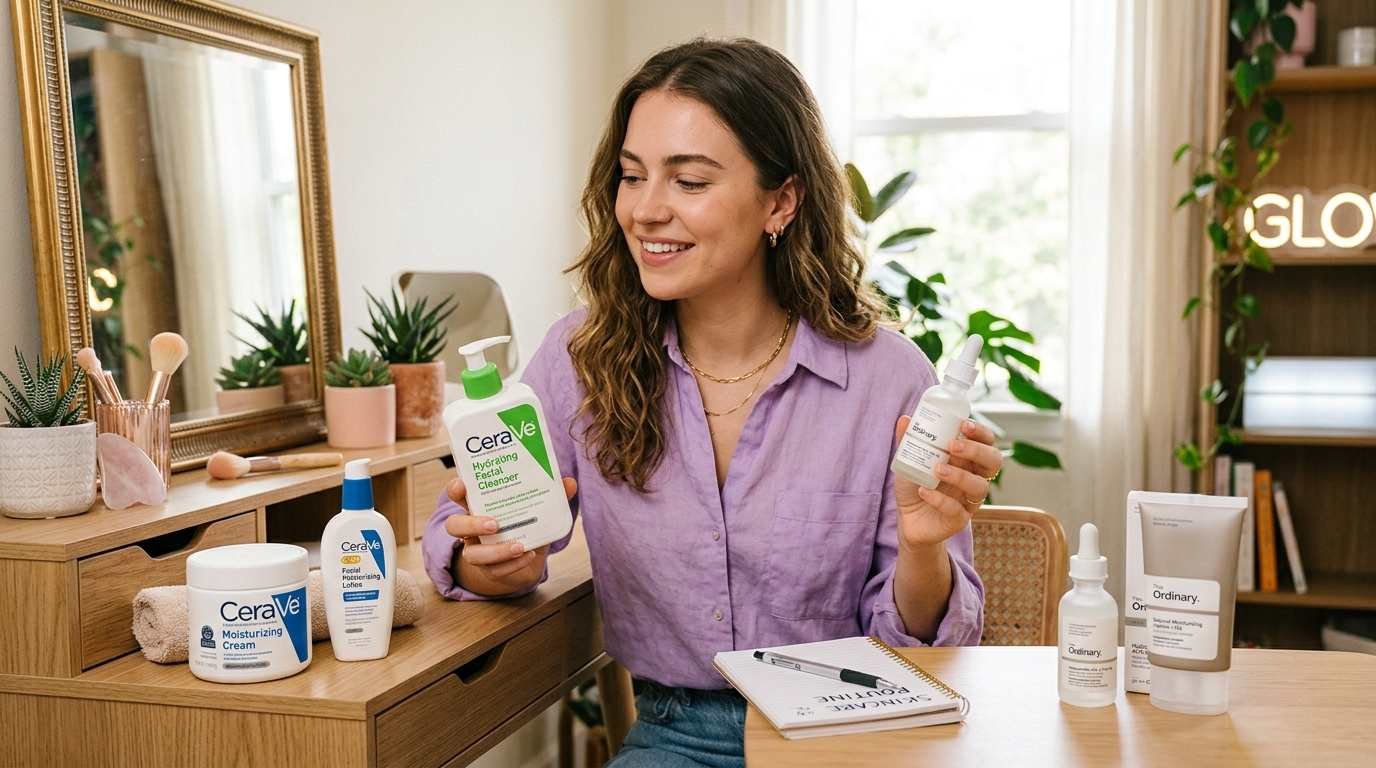
I’m a Gen Z Woman: How Does CeraVe Compare to The Ordinary for Skincare Effectiveness?
You walk into Target with a TikTok-sized shopping list: niacinamide, salicylic acid, retinol, and a “barrier repair” cream.
Two hours of routine later, your face stings, your cheeks are flaky, and you have no idea which product caused it.
That’s the CeraVe vs The Ordinary problem in one scene. Both brands are cheap, both are everywhere, and both have loyal fans.
Here’s the short answer. CeraVe is better at repairing and protecting your skin barrier. The Ordinary is better at targeting specific problems like breakouts and dark marks.
Most Gen Z women get the best results by using CeraVe as the base and adding one Ordinary active on top.
Below, you’ll see which one fits your skin problem, what a routine really costs, and who should skip what.
CeraVe vs The Ordinary at a Glance
| CeraVe | The Ordinary | |
|---|---|---|
| Main job | Repair and protect the barrier | Treat one specific concern |
| Best for | Dry skin, sensitive skin, beginners | Acne, texture, dark marks |
| Typical price | About $12–$20 | About $6–$15 |
| Irritation risk | Low | Higher with strong actives |
| Learning curve | Easy | Steeper |
| How fast you notice | Hydration within days | Weeks to months for actives |
Prices are ballpark. Check the current price before you buy.
What “Effective” Actually Means
Skincare works when three things line up: it hydrates and protects your skin, it treats your specific concern, and your skin tolerates it.
No brand wins all three. That’s why “which is better” arguments go nowhere online.
A serum that cleared someone else’s chin can wreck your barrier. Your skin type, your routine, and how fast you add products matter more than the logo.
So skip “which brand is better?” and ask, “what does my skin need right now?”
One caveat: painful, cystic, or stubborn acne often needs more than drugstore products. A dermatologist can prescribe treatment that goes further.
Two Different Philosophies: Repair vs Treat
CeraVe was developed with dermatologists and built around three essential ceramides (1, 3, and 6-II), hyaluronic acid, and, in many products, niacinamide. Ceramides help your skin hold onto water, which is why the brand leans on them for barrier support.
The Ordinary sells single active ingredients and prints the strength right on the label. “Niacinamide 10% + Zinc 1%” means exactly that. You choose the ingredient, and you build the routine.
That gives you control. It also gives you responsibility.
The line isn’t as clean as TikTok makes it, though. CeraVe sells acne cleansers with salicylic acid or benzoyl peroxide, plus a retinol serum. The Ordinary sells a moisturizer, Natural Moisturizing Factors + HA.
Think of it as a tendency, not a rule: CeraVe leans toward care, and The Ordinary leans toward treatment.
Acne: Which One Clears Breakouts Better?
For active breakouts, The Ordinary usually gives you more targeted options. Salicylic Acid 2% Solution clears clogged pores, and Niacinamide 10% + Zinc 1% helps with oil.
The brand’s own directions for the salicylic acid recommend evening use and a patch test. It also says to avoid sensitive, peeling, or compromised skin.
CeraVe handles acne in a gentler format. Its Acne Control Cleanser has 2% salicylic acid plus niacinamide and ceramides, and it also makes benzoyl peroxide cleansers.
Here’s how that plays out. Say you break out along your jawline the week before your period.
A simple plan: CeraVe cleanser morning and night, Ordinary niacinamide in the morning, salicylic acid two or three nights a week, and CeraVe moisturizer after.
Cycle-linked breakouts are common, and skincare can calm them without always stopping them. If they keep coming back, ask a doctor about options.
Watch for purging. When you start salicylic acid or a retinoid, your skin can break out more for a few weeks as it turns over faster.
Purging tends to show up where you usually break out. Irritation looks like burning, redness, or breakouts in new spots. If it’s the second one, pull back.
Give acne products at least 4 to 8 weeks before you judge them. And keep moisturizing. The American Academy of Dermatology notes that moisturizer helps people whose acne treatments dry them out.
Dry Skin and Hydration: CeraVe Wins
CeraVe Moisturizing Cream, the big tub, is the classic for a reason. It combines ceramides and hyaluronic acid to help skin hold water.
The Ordinary’s Hyaluronic Acid 2% + B5 pulls water into your skin. It doesn’t rebuild your barrier on its own.
Think of hyaluronic acid as the water and a ceramide moisturizer as the lid. Put the serum on damp skin, then seal it with CeraVe cream.
Oily but dehydrated skin is the case most articles skip. If your T-zone shines but your cheeks feel tight, you probably still need moisturizer.
Go lighter, though. A lotion like CeraVe’s PM Facial Moisturizing Lotion usually feels better than the heavy tub on oily skin.
Skin Barrier Repair: Fixing the Over-Exfoliation Spiral
Barrier damage feels like stinging when you apply plain moisturizer, tightness, redness, flaking, and sudden breakouts.
The usual cause is stacking too many actives. Say you used The Ordinary’s AHA 30% + BHA 2% peel on Sunday, retinol on Monday, and a scrub on Wednesday. Your skin never gets a recovery day.
Try this two-week reset:
- Stop all acids, retinoids, and scrubs.
- Wash with a gentle cleanser like CeraVe Hydrating Cleanser.
- Apply CeraVe Moisturizing Cream morning and night.
- Wear SPF every morning.
Most mild cases calm down within a couple of weeks. If your skin is still burning or cracking, see a dermatologist.
Once it’s calm, bring back one active, two nights a week. Add a second only after your skin handles the first.
Dark Spots and Post-Acne Marks: Go Gentle, Especially on Deeper Skin Tones
The Ordinary has the stronger lineup here: azelaic acid, niacinamide, vitamin C, and alpha arbutin. CeraVe doesn’t focus on pigmentation.
But the strongest option isn’t always the smartest. Irritated skin can leave behind dark marks that linger for months, and this happens more often on deeper skin tones.
So a harsh peel meant to fade marks can create new ones. Start with niacinamide or The Ordinary’s Azelaic Acid Suspension 10%, and use it a few times a week at first.
Pair it with daily SPF. Sun exposure can darken existing marks, which undoes your progress.
Expect a long game: usually 8 to 12 weeks before you see a real difference.
Sensitive Skin: Start With CeraVe
CeraVe is the safer default. Its core products are fragrance-free and non-comedogenic, and they focus on supporting the barrier.
You can still use The Ordinary. Start with gentle options like Hyaluronic Acid 2% + B5, and hold off on retinoids and strong acids until your skin feels calm.
Patch test anything new:
- Dab a small amount behind your ear or along your jawline.
- Wait 24 to 48 hours.
- If you see no redness or itching, use it on your face every other day at first.
Beginners: Keep It Boring First
If you’re new to skincare, start with three things: a gentle cleanser, a moisturizer, and SPF. CeraVe covers all three.
Wait until your skin feels steady for a few weeks, then add one active. Use it two or three nights a week and watch how your skin reacts.
The most common beginner mistake is opening with a strong peel or a high-strength retinol because a video made it look easy.
What a Real Routine Costs
Prices below are ballpark figures and change often, so check at checkout.
Basic routine (about $48–$51): CeraVe Hydrating Cleanser ($16), CeraVe Moisturizing Cream ($16–$19), and CeraVe AM SPF 30 lotion (~$16).
Acne routine (about $61–$66): the basic routine plus The Ordinary Salicylic Acid 2% ($7–$9) and Niacinamide 10% + Zinc 1% ($6).
Barrier recovery (about $32–$35): CeraVe Hydrating Cleanser and Moisturizing Cream. Nothing else.
Here’s why the math works. CeraVe’s large cleansers and creams last months, so they suit daily basics. The Ordinary’s small bottles keep each active cheap.
If money’s tight, spend on SPF and a moisturizer first. Those two do more for long-term skin health than any serum.
Buy from the brands, major retailers, or pharmacies. Deep discounts from unknown sellers on marketplaces and social shops can mean fakes.
Can You Use CeraVe and The Ordinary Together?
Yes, and this is how most routines work best.
Morning: CeraVe Hydrating Cleanser, then The Ordinary Niacinamide 10% + Zinc 1%, then CeraVe moisturizer, then SPF.
Evening: CeraVe cleanser, then one Ordinary active (salicylic acid, retinol, or azelaic acid), then CeraVe Moisturizing Cream.
Layer thin to thick: water-based serums first, creams last.
Don’t stack strong actives on the same night. Skip retinoids and exfoliating acids together. And if you already use CeraVe’s retinol serum, don’t add The Ordinary’s retinol on top.
Wear SPF every morning. Acids and retinoids make your skin more sun-sensitive.
Who Should Skip What
Gen Z covers a wide range of ages and situations, so a few flags matter:
- Pregnant or trying to conceive: Retinoids are commonly avoided during pregnancy, and some other actives need a check too. Ask your doctor before using retinoids or strong acids.
- Eczema, rosacea, or another skin condition: CeraVe’s gentle basics may suit you, but see a dermatologist. A moisturizer isn’t a treatment.
- Sensitive, peeling, or broken skin: Skip strong actives like The Ordinary’s Salicylic Acid 2% until it heals. Read the label directions.
- Brand new to skincare: Skip the peel and the retinol for now. Start with the basics.
Final Verdict: How to Choose in 60 Seconds
- Dry, tight, or stinging skin: Start with CeraVe.
- Oily skin with breakouts: CeraVe cleanser and moisturizer, plus The Ordinary’s Salicylic Acid 2% or Niacinamide 10% + Zinc 1%.
- Dark marks: The Ordinary’s Azelaic Acid or niacinamide, used gently, with daily SPF.
- Not sure: CeraVe cleanser, moisturizer, and SPF. Add one Ordinary active after a few weeks.
The winning move isn’t picking a brand. It’s building on CeraVe’s basics and adding one Ordinary active at a time.
If nothing improves after 8 to 12 weeks, or your skin keeps getting worse, see a dermatologist.
FAQs
Is CeraVe better than The Ordinary?
Neither wins across the board. CeraVe is better for hydration, barrier repair, and sensitive skin. The Ordinary is better for targeted concerns like acne and dark marks.
Which is better for acne?
The Ordinary has more targeted options, like Salicylic Acid 2%. CeraVe offers gentler acne cleansers with salicylic acid or benzoyl peroxide.
Can I use CeraVe and The Ordinary together?
Yes. Use CeraVe for cleansing and moisturizing, and add one Ordinary active at a time.
Which is better for sensitive skin?
CeraVe. If you use The Ordinary, start with gentle options like Hyaluronic Acid 2% + B5, and patch test first.
Is The Ordinary good for dark spots?
Yes, ingredients like azelaic acid and niacinamide target them. Go slowly and wear SPF daily.
Which is cheaper?
The Ordinary costs less per bottle. CeraVe’s big sizes give you more product for daily basics.
SEO notes (delete before publishing)
Meta description: Gen Z woman comparing CeraVe vs The Ordinary? See which works for acne, dry skin and your barrier, plus real routines with costs.
Slug: /cerave-vs-the-ordinary-gen-z-woman/
Internal links to add (only if live): Link your Nivea vs Garnier beginner post in the Beginners section, your La Roche-Posay vs Neutrogena acne post in the Acne section, and your Nivea vs Aveeno sensitive skin post in the Sensitive Skin section.
Verify before publishing: current prices, the AAD moisturizer point, pregnancy and age guidance, and the marketplace counterfeit warning.